
Client Communication Tips for Virtual Assistants: How to Reduce Confusion and Set Clear Expectations

You can be organized, reliable, and good at your work while still finding client communication difficult to manage.
One client likes regular updates. Another sends short replies and only wants to know when the task is complete. Then there is the client who shares several ideas in one message, leaving you unsure which one should come first.
The task itself may be straightforward, but the communication around it takes more time than expected.
You might reread a message several times, adjust your response, or wonder whether you should ask another question. Sometimes you begin a task based on what you think the client meant, only to learn that they had something different in mind.
This does not automatically mean there is a problem with the client or the work. You may simply have different communication preferences.
Once you begin noticing those differences, it becomes easier to decide what needs clarification and how to respond.
Why Client Communication Can Feel Complicated
VA work involves more than completing a task list. You are also interpreting instructions, organizing priorities, managing expectations, and turning client ideas into clear next steps.
Clients have different ideas about what good support looks like.
One may appreciate friendly updates throughout the project. Another may prefer fewer messages with the most important information at the top. Some want to understand the full process before work begins, while others are ready to move as soon as they share an idea.
Communication can become harder when your natural approach does not match what the client expects.
For example, you may keep your updates short because you see that as efficient. A client who values regular communication may interpret that as a lack of interest or progress. On the other hand, a client who prefers direct information may find a long update difficult to sort through.
Both approaches can work. The important part is understanding what the client needs from the communication and deciding whether a small adjustment would help.
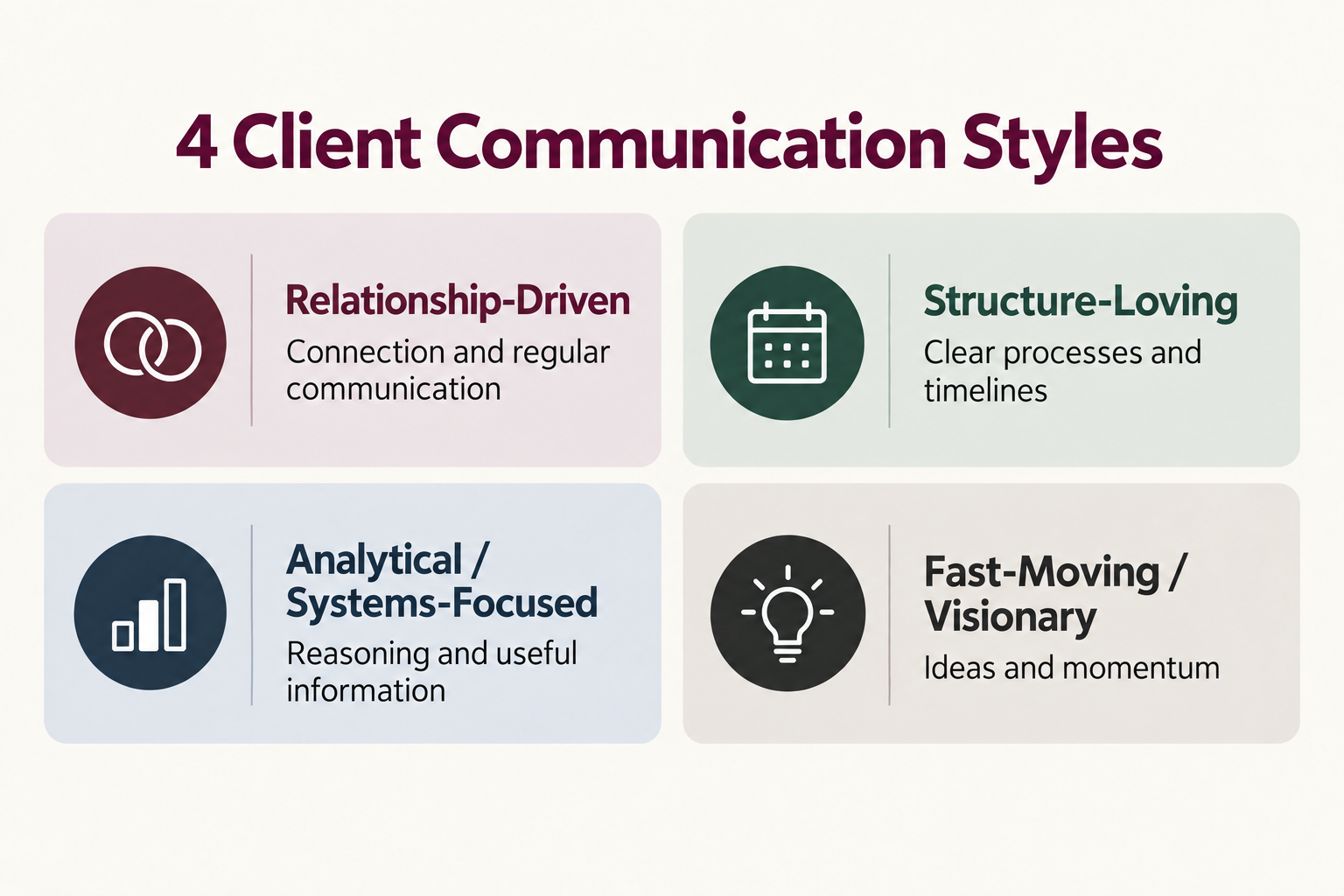
Four Client Communication Styles You May Recognize
Communication styles are reference points rather than fixed categories. Most people show a mix of preferences, and those preferences may change depending on the project or situation.
You are not trying to place every client into a box. You are looking for patterns that help you understand how the working relationship operates.
Relationship-Driven Clients
Relationship-driven clients value trust, connection, and regular communication.
They may enjoy conversational messages, share extra context, or check in even when nothing is urgent. Knowing that you are engaged with their business can be just as important as knowing the task is moving forward.
A consistent update schedule can work well with this style. It keeps communication warm and reassuring without creating an expectation that you will respond immediately throughout the day.
Structure-Loving Clients
Structure-loving clients feel more comfortable when the process, timeline, and next steps are clear.
They may ask several questions before a task begins or want to know what will happen after each stage. This can sometimes feel like they are questioning your work, but they may simply want a clearer picture of the process.
Written timelines, task lists, and brief summaries can make communication smoother with this style.
Analytical or Systems-Focused Clients
Analytical clients often prefer direct communication, clear reasoning, and information they can use to make a decision.
Their replies may be brief, and they may ask why you recommend a certain option before agreeing to it. Short messages do not necessarily mean they are unhappy or disengaged.
With this style, the most useful approach is often to lead with the recommendation or outcome, then provide the reasoning that supports it.
Fast-Moving or Visionary Clients
Fast-moving clients often communicate through ideas.
They may think out loud, change direction during a conversation, or send several possibilities at once. Their energy can keep a project moving, but it may also make it difficult to tell which ideas are ready for action.
Taking a moment to confirm the current priority can prevent an idea from becoming a task before the client has made a final decision.
Small Changes That Can Improve Client Communication

Recognizing a communication pattern is helpful, but you do not have to create a completely different process for every client.
Small adjustments are often enough.
Start by confirming what should happen next. If a message includes several ideas or requests, ask which one should be treated as the current priority.
It also helps to make timelines specific. Words such as “soon” or “later this week” can mean different things to different people. A clear day, time, or project milestone gives both sides the same expectation.
Pay attention to the amount of information the client uses when making decisions. Some want the reasoning behind a recommendation, while others prefer a short summary and a clear next step.
You can also look for patterns in the conversations that take the most effort. If you regularly answer the same follow-up questions or have to clarify changing priorities, the communication process may need a small update.
Keep Your Boundaries Consistent
Adjusting your communication does not mean changing your working hours, response times, or scope for every client.
Your boundary can stay consistent while the way you explain it changes slightly from one client to another.
A relationship-driven client may appreciate a friendly reminder about when you will respond. A structure-loving client may prefer to see that expectation written clearly in the onboarding information. A fast-moving client may need confirmation that a new idea has been noted but is not yet an active task.
Clear boundaries help both sides understand how the working relationship operates. They can also prevent small communication concerns from becoming regular sources of frustration.
It is worth noticing how much adjustment each client relationship requires from you. Some styles may fit naturally with the way you work, while others need more thought or clarification.
That information can help you improve current relationships and ask better questions when speaking with potential clients.
A Simple Client Communication Check-In
Choose one client relationship and think about what usually happens during your conversations.
What type of updates does the client respond well to? Where does confusion usually begin? Are priorities, timelines, or requests ever left open to interpretation?
Then choose one small adjustment to try.
You might send a more specific timeline, confirm the next priority before starting, or create a regular update schedule. The goal is to address the communication pattern that creates the most extra work.
Good client communication is not about finding the perfect response every time. It comes from noticing patterns, asking questions early, and making expectations easier to understand.
Take a Closer Look at Client Communication Styles
Recognizing a communication style is a useful first step. The harder part is often deciding how to respond, what needs to be clarified, and when a boundary should be restated.
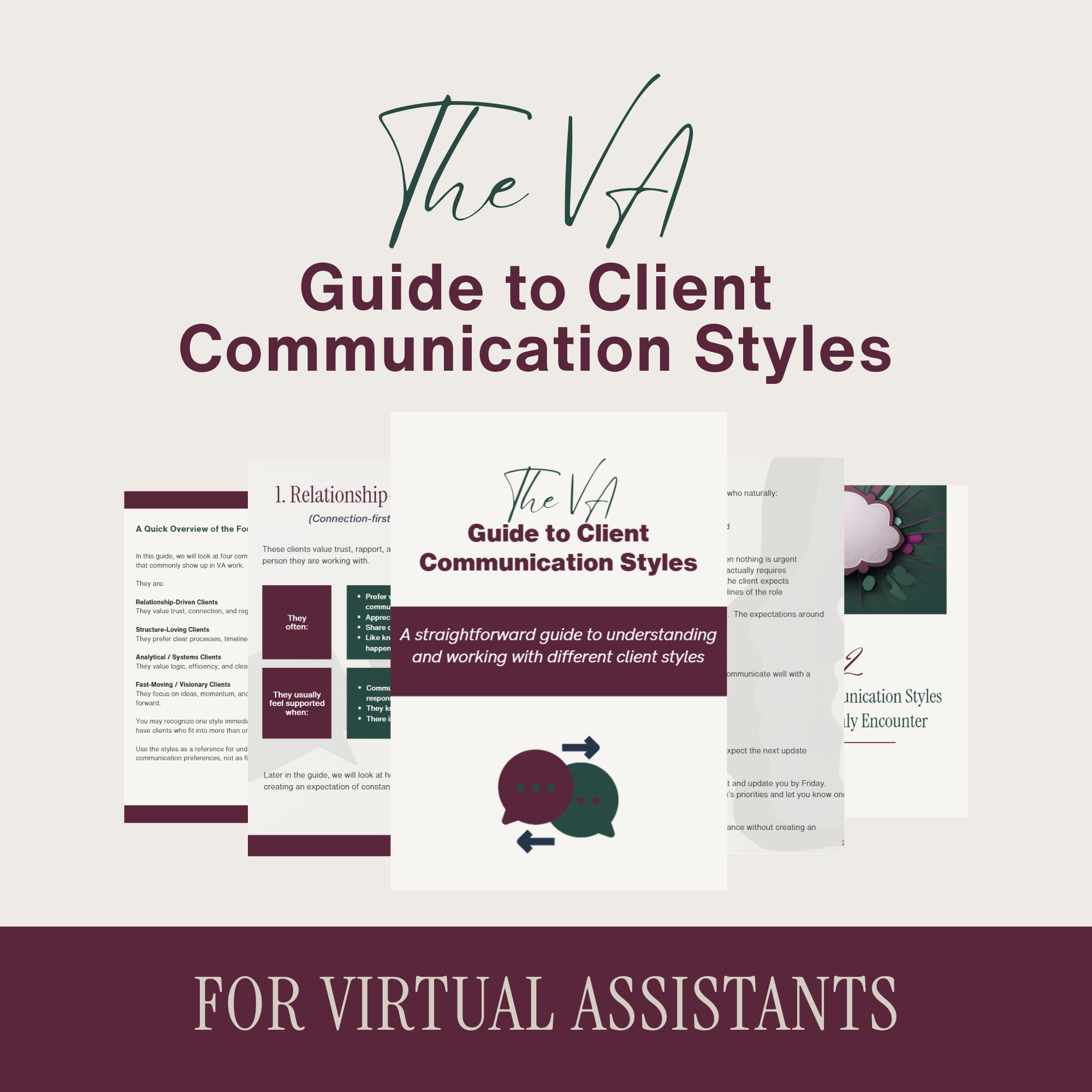
The VA Guide to Client Communication Styles takes these ideas further with everyday VA examples, adaptable scripts, boundary guidance, reflection prompts, and a Client Communication Check-In worksheet.
You can use the resource when onboarding a new client, preparing for a discovery call, or reviewing a working relationship that has started to feel unclear.
Start with the client relationship that needs the most clarity and work through the resource one section at a time.